You're a small team held to a big company's standard.
23 June 2026
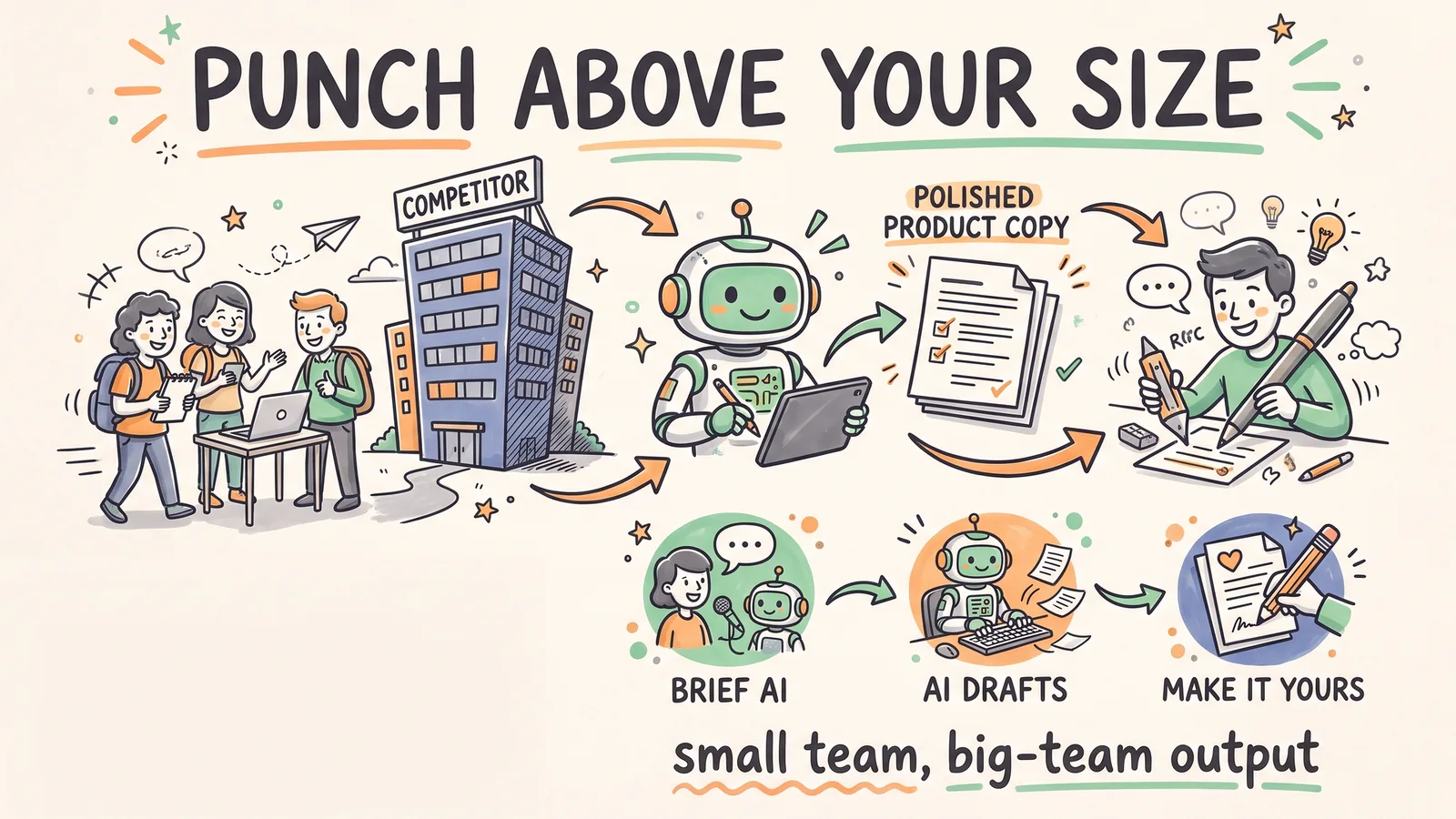
There's a particular kind of pressure on a small team. You're competing with companies that have ten times your headcount, and the customer can't see the difference. Your website has to look as complete as theirs. Your product pages have to read as well as theirs. Same standard, a fraction of the people.
Content is usually where that gap shows. Big brands have writers. You have a handful of people already doing three jobs each, and product descriptions keep landing at the bottom of the list.
A cooler company runs its whole operation with twelve people. Twelve. And they use AI to write their product descriptions, the kind of polished, on-brand copy you'd expect from a company many times their size.
One person briefs the AI on the product and the brand's tone. The AI produces a strong first draft for each item. A person reads it, sharpens it, makes sure it sounds like them, and it goes live. The output looks like it came from a dedicated content team, because in effect it did. That team just happens to be one person and a well-briefed AI.
That's the real advantage AI hands a small business. The output of a big team, without the cost of one. You stop letting your size show up as weaker copy than your bigger competitors, while keeping your team exactly as lean as it is.
So if you're a small team carrying a big standard, that's the move. Pick the work where you're judged against companies far bigger than you, the writing, the descriptions, the polish. Brief AI properly, let it draft, then make it yours. You keep your team small. Your work stops looking small.