Your enquiries arrive after you've clocked off.
23 June 2026
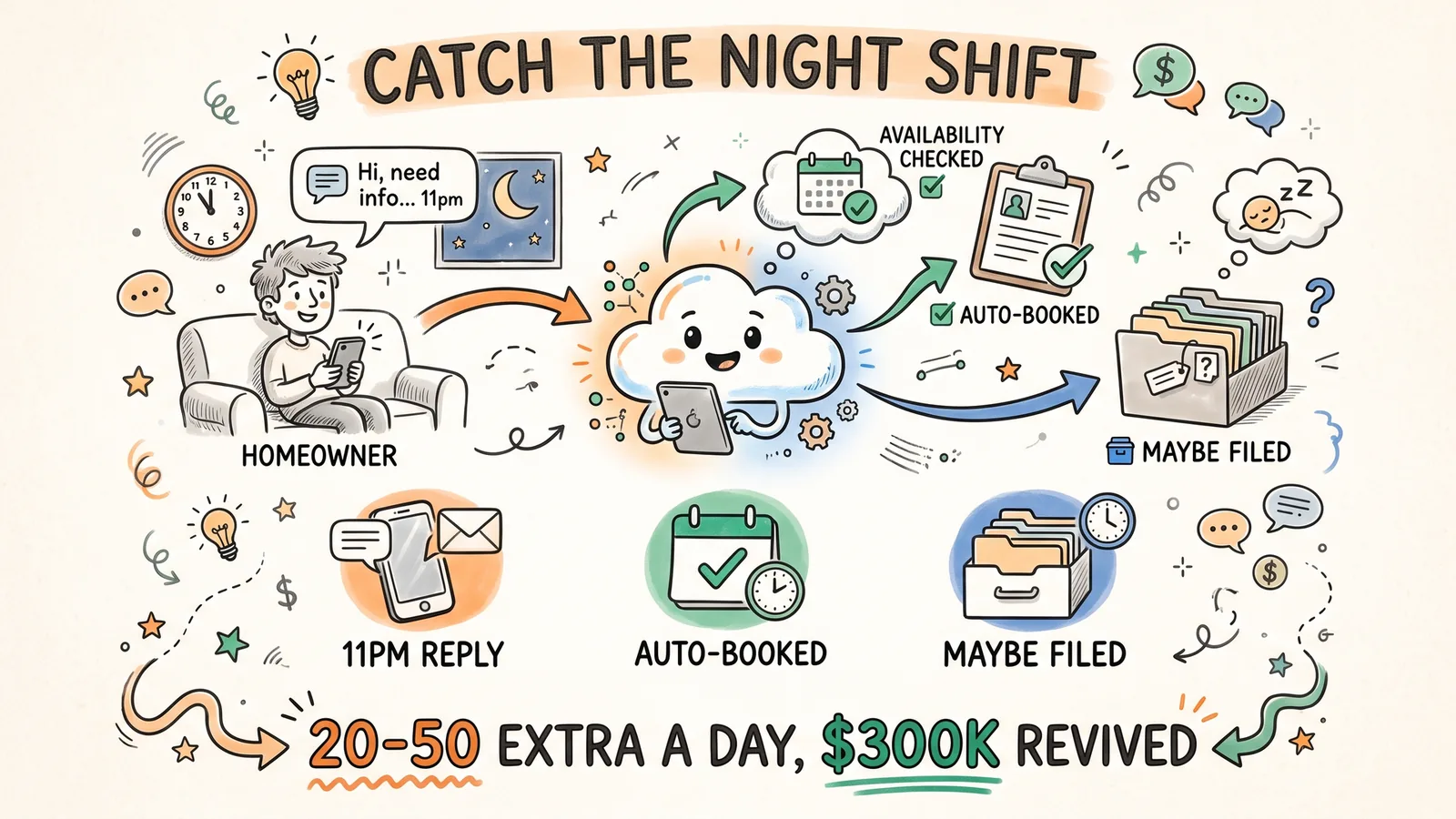
A customer fills in your form or texts you back at half ten at night. They're keen right then. By the time someone sees it the next morning, they've found someone else.
For any business that runs on enquiries, that's a daily leak. The interest is real, but it lands when nobody's there to catch it.
A company in the home-services world had this at scale. Hundreds of new leads a day, and a lot of them replying to estimate texts late at night, long after the office had gone home. Every one seen the next morning was a coin-flip on whether the customer had already booked elsewhere.
So they handed the night shift to AI.
Now when a homeowner texts back, an automated system reads the message, checks what's free, and books the appointment then and there. No person involved. That one change books 20 to 50 extra appointments a day, all from replies that used to sit unread until morning.
The replies don't feel robotic either. ChatGPT reads what the person actually wrote and answers in plain, human language. It catches the real worry instead of firing back a keyword. About 80 to 90% of first replies are handled without anyone stepping in.
Then they went after the leads everyone gives up on. Most firms treat a 'not right now' as dead. Instead, when a lead says something like 'call me in a month', a rule files it and schedules the follow-up automatically. Those revived old leads now bring in 5 to 10% of monthly revenue, around $300,000 a year.
And the team running all of this is two people. Hundreds of leads a day between them, with the overnight money and the 'maybe' pile both getting caught.
So look at your own two leaks. The enquiries that land when you're closed, and the leads you've written off. You don't need a bigger team to catch them. You need something that answers at 11pm and remembers to follow up in March.