The £20,000 AI win that came with a catch.
23 June 2026
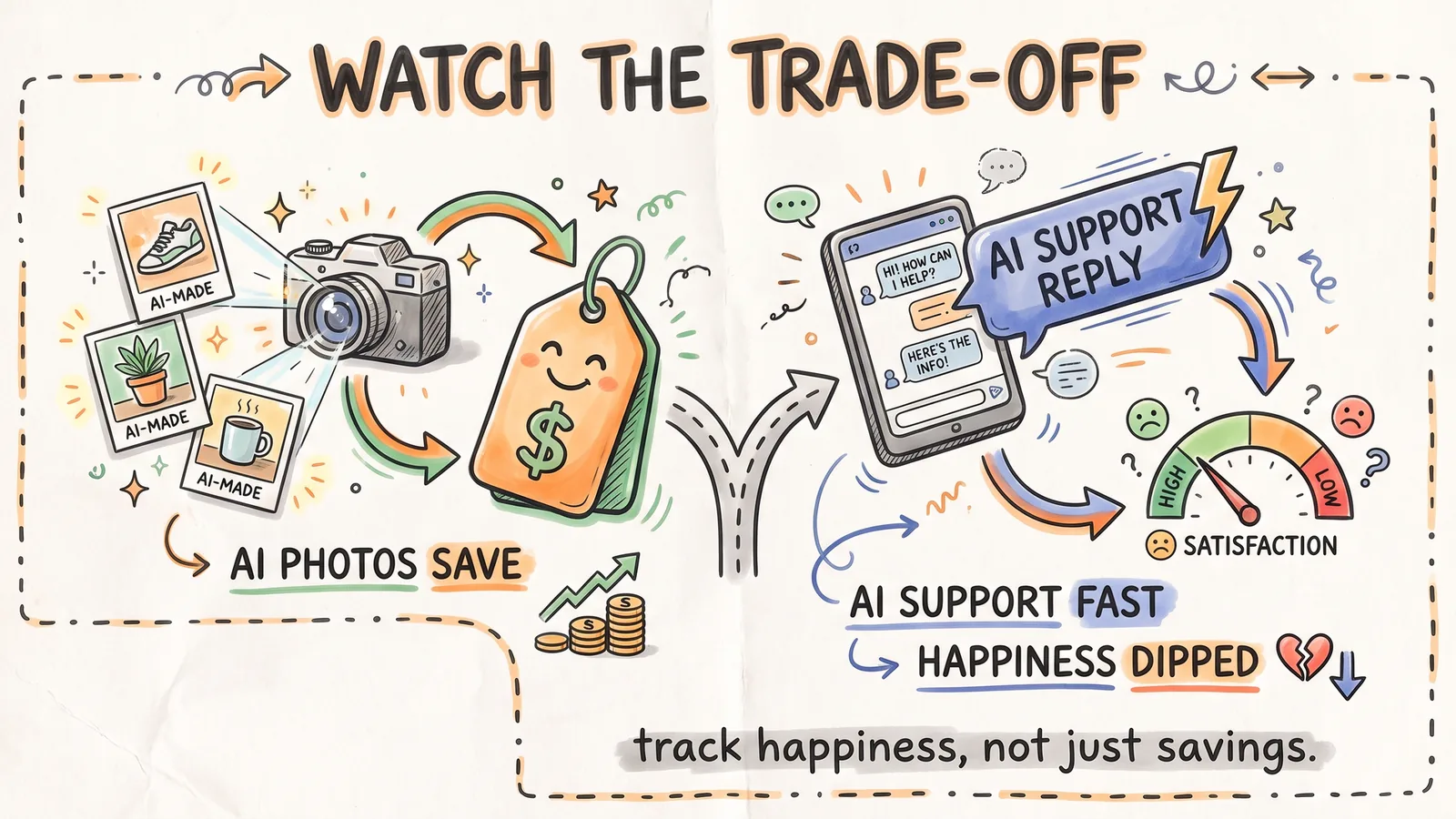
Most AI stories stop at the saving. This one keeps going, into the part that actually teaches you something.
A health and beauty brand had two expensive, repetitive jobs, the kind every product business knows. Shooting product photography. Answering a constant stream of customer messages.
They put AI on both. The two results went in opposite directions, and that's the useful bit.
Take the photography first. A proper product shoot means a studio, a photographer and a day blocked out. They used AI-generated imagery instead and cut as much as £20,000 from their photoshoot costs. For a business this size, that's a real number, a hire, or a quarter's ad budget.
Then customer service. They built a support tool trained on their own FAQs and the questions customers had actually asked before. Sensible idea. Feed the AI what you already know, let it answer the easy ones in seconds, free your people for the rest.
And it's fast. The AI now handles about 13% of messages, often replying within 30 seconds.
But the satisfaction score on those AI-handled messages dropped, from 4.7 out of 5 down to 4.05. On the messages a person answered, customers stayed happier.
That gap is the whole lesson. AI is brilliant at the clear, common question. It struggles with the awkward one, the one that doesn't fit the script, which is often the message the customer cares about most.
None of this means the project failed. A 30-second answer on one message in eight is real relief for a stretched team, and £20,000 is £20,000. The error would be celebrating the saving and never looking at the cost sitting right next to it.
So if you put AI into customer service, watch more than speed and spend. Compare satisfaction on the AI-handled messages against the ones your people answer, and keep an eye on how often the AI has to pass someone to a human. Make that handover quick, and decide on purpose which questions the AI should never answer alone.
In customer service, hours saved is the wrong scoreboard. The number that matters is whether your customers walk away as happy as they used to. Watch that one, or the saving will cost you more than it saves.