Stop Automating Until You've Tried Deleting First
28 June 2026
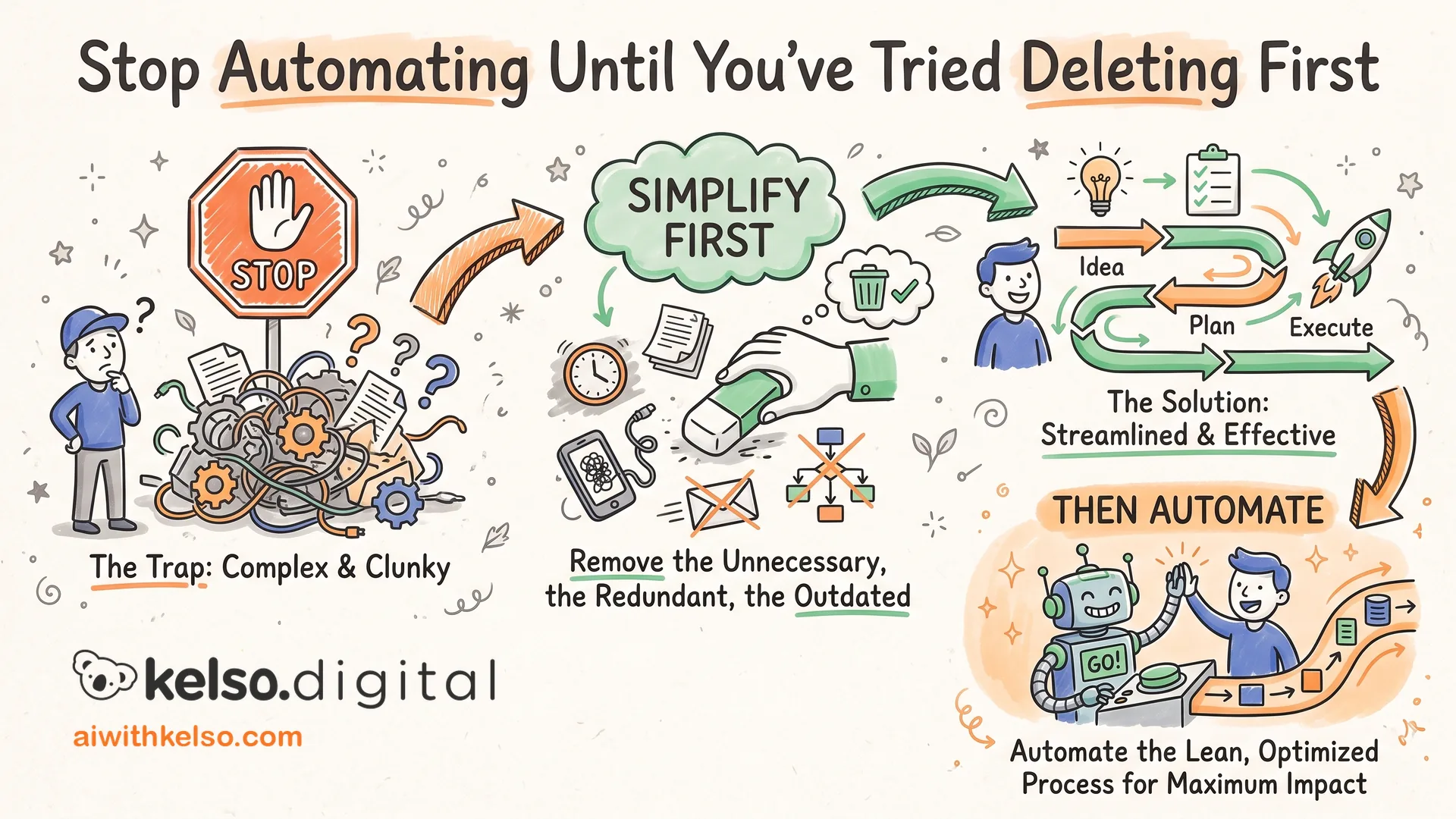
Automating a broken process doesn't fix it. It just makes the problem happen faster.
Most business owners I work with are doing this backwards. They find a slow, painful process, they automate it, and six months later they're back wondering why it's still painful. They automated something that should have been deleted. The sequence is wrong, and that's where people go wrong before AI even enters the conversation.
There's an order that fixes this, and the order is what matters. Step one: question the process itself. Why does it exist? Does the outcome it produces still matter to the business? This step has to come first, because getting it wrong means every step that follows is wasted effort. Step two: try to delete it. If it doesn't survive that question, cut it. Delete more than feels comfortable. If you've never had to bring something back, you weren't deleting enough. Step three: only now do you simplify what remains. Go through what's left and cut anything that doesn't directly produce the outcome. Step four: speed it up. Step five: now you automate.
Elon Musk made this point about the biggest mistake he made in business: optimising processes that shouldn't have existed. Most people read that and nod. Very few change what they do next Monday.
I use this sequence before recommending any automation to a business. Run it on one process this week. Pick the one your team complains about most. Work through the five steps in order, and do not skip to step five until the first four are done.
Most of what gets automated right now would be better off deleted. Start there.