OpenAI says AI is trained to guess
11 October 2026
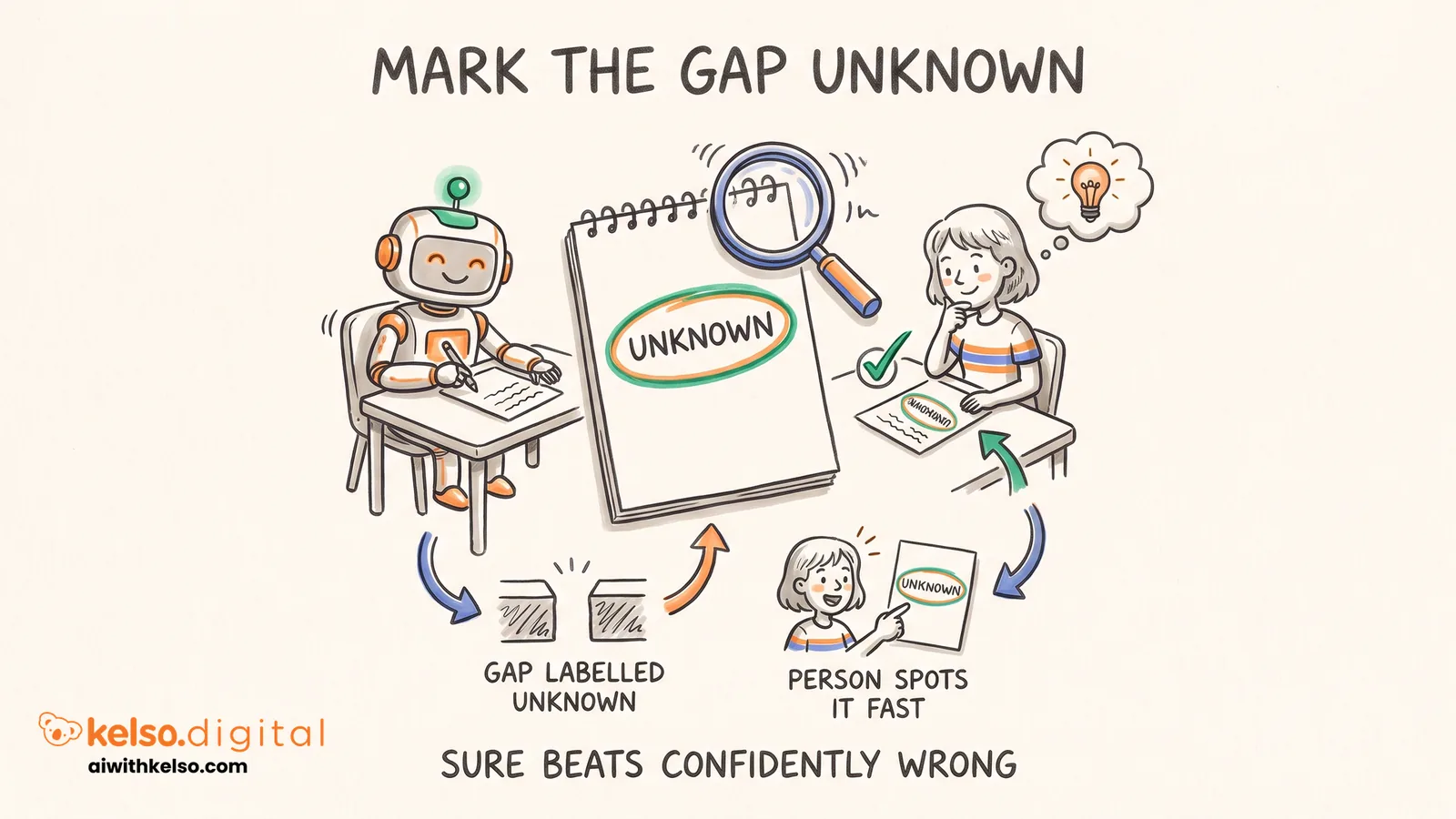
OpenAI says its own AI models learn to guess when they don't know the answer.
That's the argument of a paper it published in September 2025, explaining why chatbots make things up. And the guess sounds just as confident as a real answer.
The models are tested a bit like a multiple-choice exam. A lucky guess can score a point, and a blank always scores nothing. Across thousands of questions, guessing beats saying "I don't know".
In an exam, that's harmless. In a reply to your customer, a confident wrong date or price is a real problem.
You can't retrain the model, but you can change what you ask of it.
Add one rule to the instructions you give your AI:
"If you can't find the answer in the information I've given you, say so, and tell me what's missing."
Then give it a way to mark the gap. Tell it to write the word UNKNOWN in the draft wherever a fact should be, with a short note on who would know.
A delivery date it couldn't find now shows up as UNKNOWN, where before it would have been a date that looked right.
The person checking the draft searches for that one word and knows exactly where to look. Every gap is visible before anything reaches a customer.
OpenAI's own view is that it's better for AI to show it's unsure than to give a confident wrong answer. That one rule gives your AI permission to do exactly that.
Comment BRAIN and I'll send you my business brain starter kit, with five templates and a prompt that interviews you to fill them in.