Why AI still doesn't sound like you
20 October 2026
You've explained your tone of voice to AI a dozen times, and it still writes like a brochure. Every reply needs rewriting before you'd put your name to it.
Describing how you sound works nowhere near as well as showing it. Words like "warm" and "professional" mean something different to everyone, so AI fills the gap with the most average version it has seen.
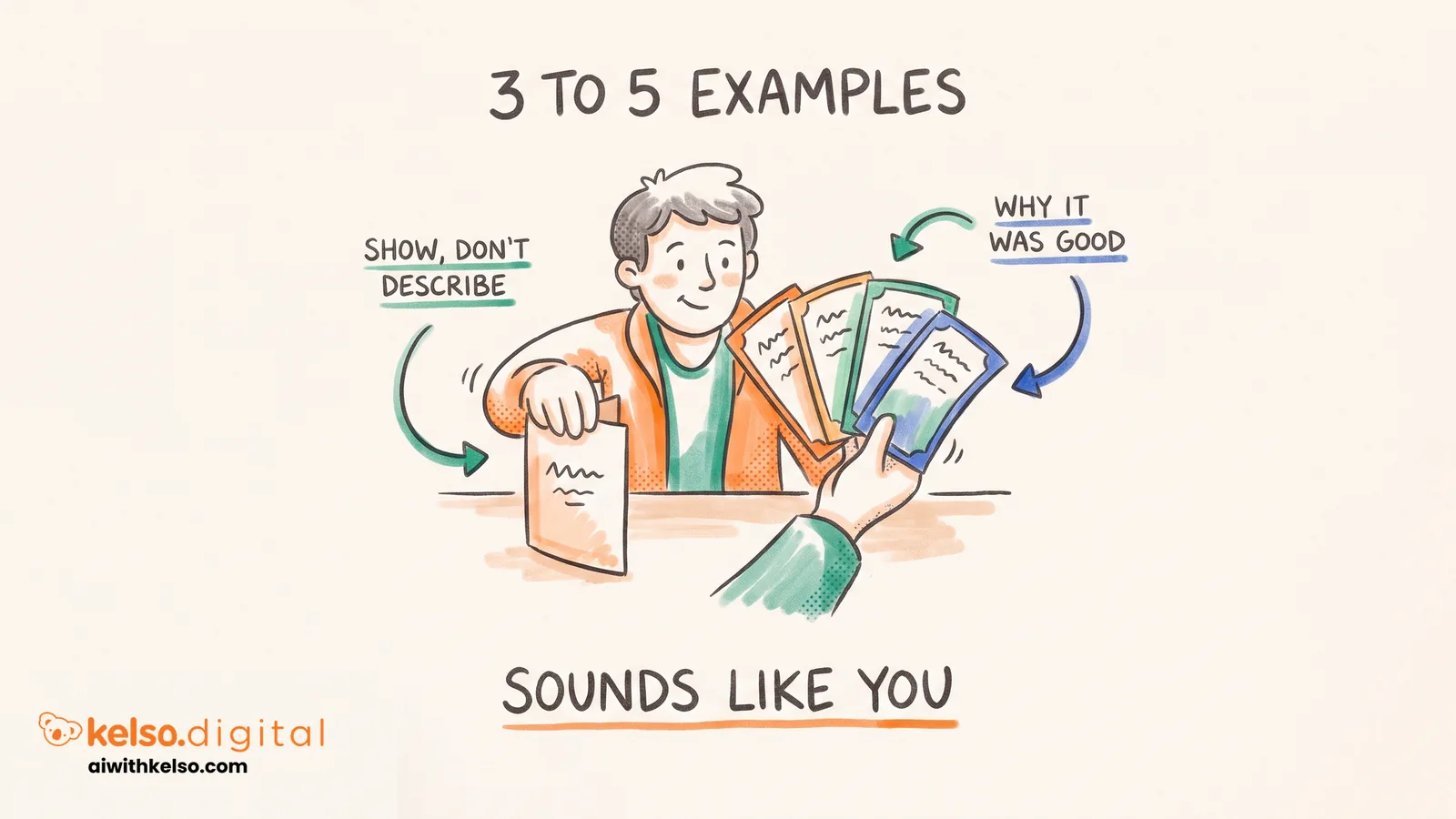
Anthropic, the company behind Claude, says three to five examples get the best results. Their guide also says the examples should be close to the real job and different from each other.
So hand it four replies you were happy to send. It picks up the length, the warmth and the way you sign off far faster than any description.
Choose those four carefully, though. If every one is a reply to a happy customer, a message from an unhappy one gets the same cheerful tone back.
I pick a normal case, one where information was missing, one complaint and one polite no.
Under each one, I add a line saying why it was good. Something like: short, answered the question first, and didn't promise a date. Then I add what to leave out when copying, like the customer's name or a detail that only applied that day.
Those notes tell AI which parts to repeat and which parts to ignore. Without them, it copies the wrong things, and one customer's details turn up in someone else's reply.
Keep the four in one file. Whenever you send a reply you're proud of, swap it in for the weakest one.
That's when AI stops sounding like a brochure and starts sounding like you.
Comment BRAIN and I'll send you my business brain starter kit, with five templates and a prompt that interviews you to fill them in.