Every order arrives in a different format, and a person has to read each one.
24 June 2026
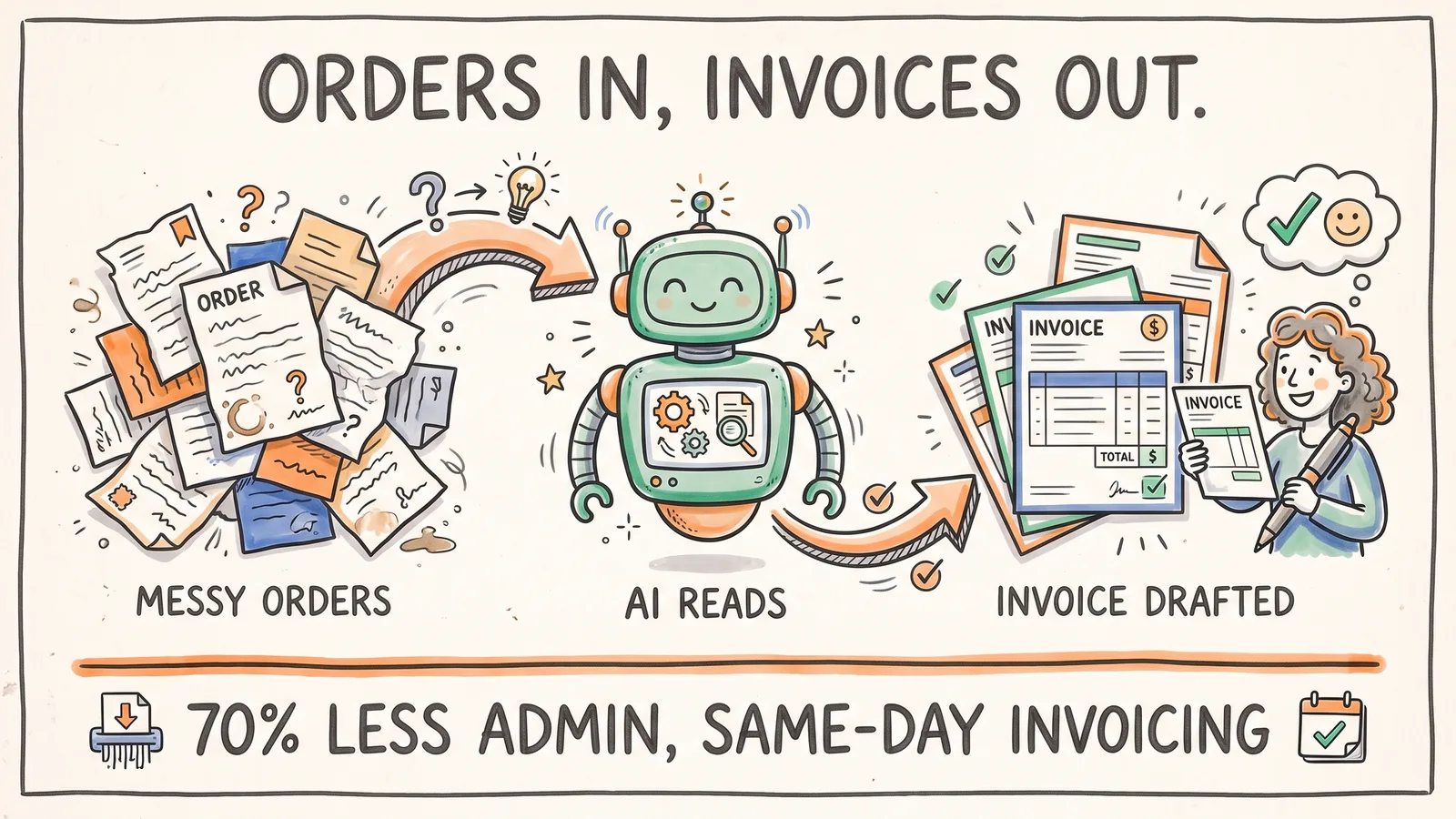
Picture the orders landing in your business. Every one a bit different. Different layouts, different wording, some neat, some a mess. And a person has to open each one, read it, understand it, and type the details into your system before anything can happen.
At one manufacturer, that job filled an entire person's day. All of it, every day, spent reading order documents and keying them in so invoices could go out. The invoices then went out a day or two late, which meant the money came in a day or two late too.
The owner didn't want to hire a second person just to keep up with the typing. So they tried something else.
Now AI reads the incoming orders, however they're laid out, the same way a person would understand them. It pulls the details and drafts the invoice automatically. The admin who used to lose her whole day to this now spends about thirty minutes at the end of it, glancing over the drafts to make sure they're right before they go out. A few seconds per order, instead of minutes.
That's more than 70% of that work gone. The errors that come from manual copying went with it. And because invoices now go out the same day the order lands, the cash comes in faster.
Notice the shape of this, because it's everywhere. Information arrives in a format a computer used to choke on, so a human had to translate it by hand. Modern AI reads messy, inconsistent documents the way a person does, which means that translating work doesn't need a person doing it full time any more.
So find the spot where someone on your team reads documents and retypes what's in them, orders, invoices, forms, applications. That's a strong first place to put AI to work. Keep a person on the final check. Hand the reading and the typing to the machine.