You're using the wrong Claude model
20 August 2026
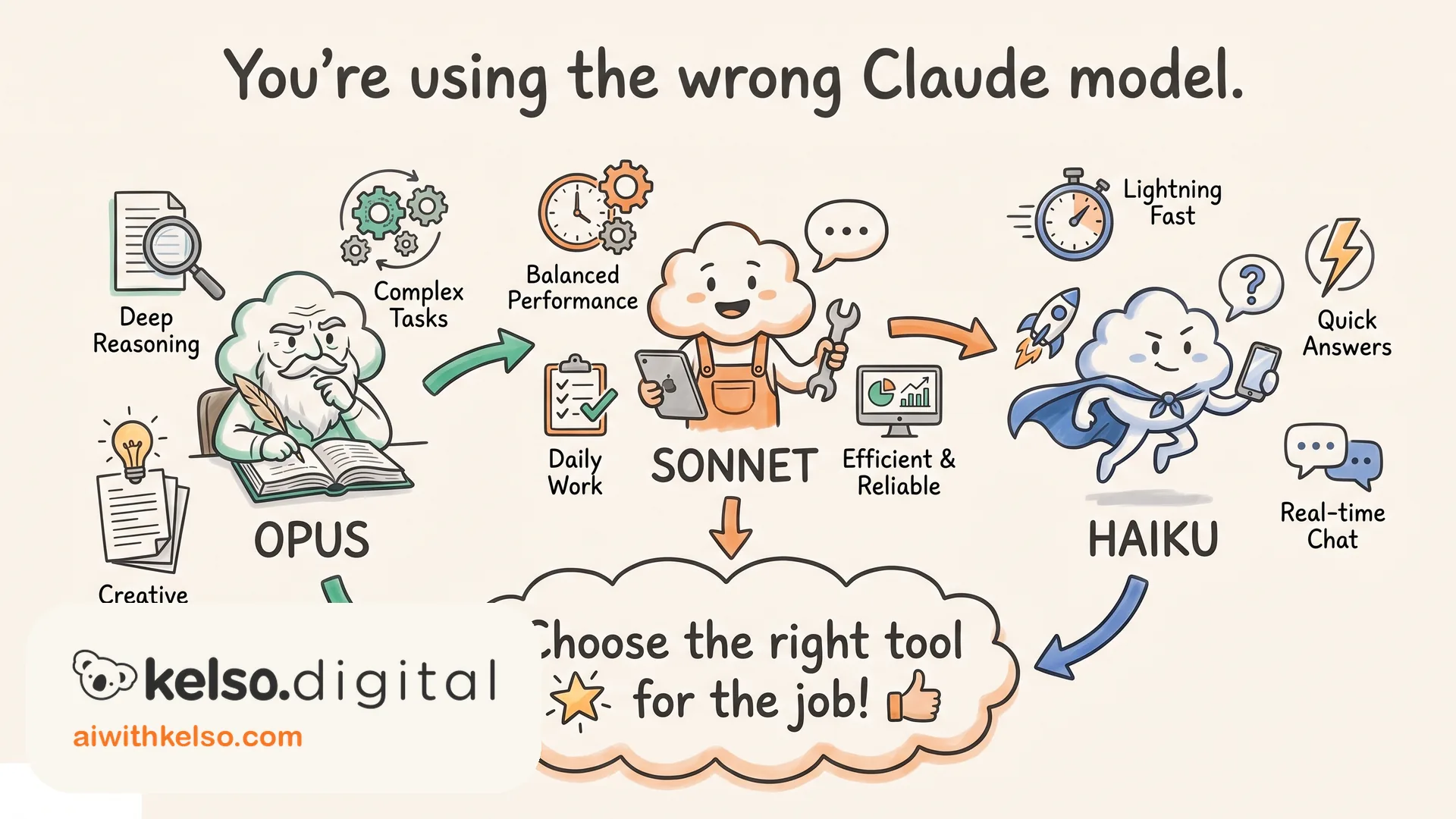
Most people never touch the two settings that decide how good Claude's answers are.
They run everything through the defaults, get average results, and decide AI is overrated.
Inside Claude you get a choice of models, and matching the model to the job matters more than any prompt you write.
Sonnet is the everyday one. It's fast, and it's well able for summarising a call or drafting a decent reply.
Opus is the deep thinker. I use it for planning, and for poking holes in an idea before I spend money on it.
Fable is the newest one, built for the biggest jobs. You describe the outcome you want, and it plans the work and carries it through with far less hand-holding.
Give Sonnet a big messy job and you'll get a shallow answer back, then you'll blame the AI for it.
The second setting is effort. It controls how long Claude thinks before it answers.
Slide it down when you want a quick reply. Turn it up when you want it to think longer and double-check its own work before it speaks.
I set both to match the job in front of me. A quick email gets Sonnet on low effort. A pricing decision I'll live with for a year gets Opus with the effort turned up.
Neither setting is hidden. They're sitting in plain sight, and most people have never opened either one.
Next time an answer feels flat, check which model you're on and where the effort is set before you rewrite the prompt.
The same question, put to the right model at the right effort, comes back sharper.