What an AI agent actually is
15 July 2026
Most people make AI agents sound complicated. They're not.
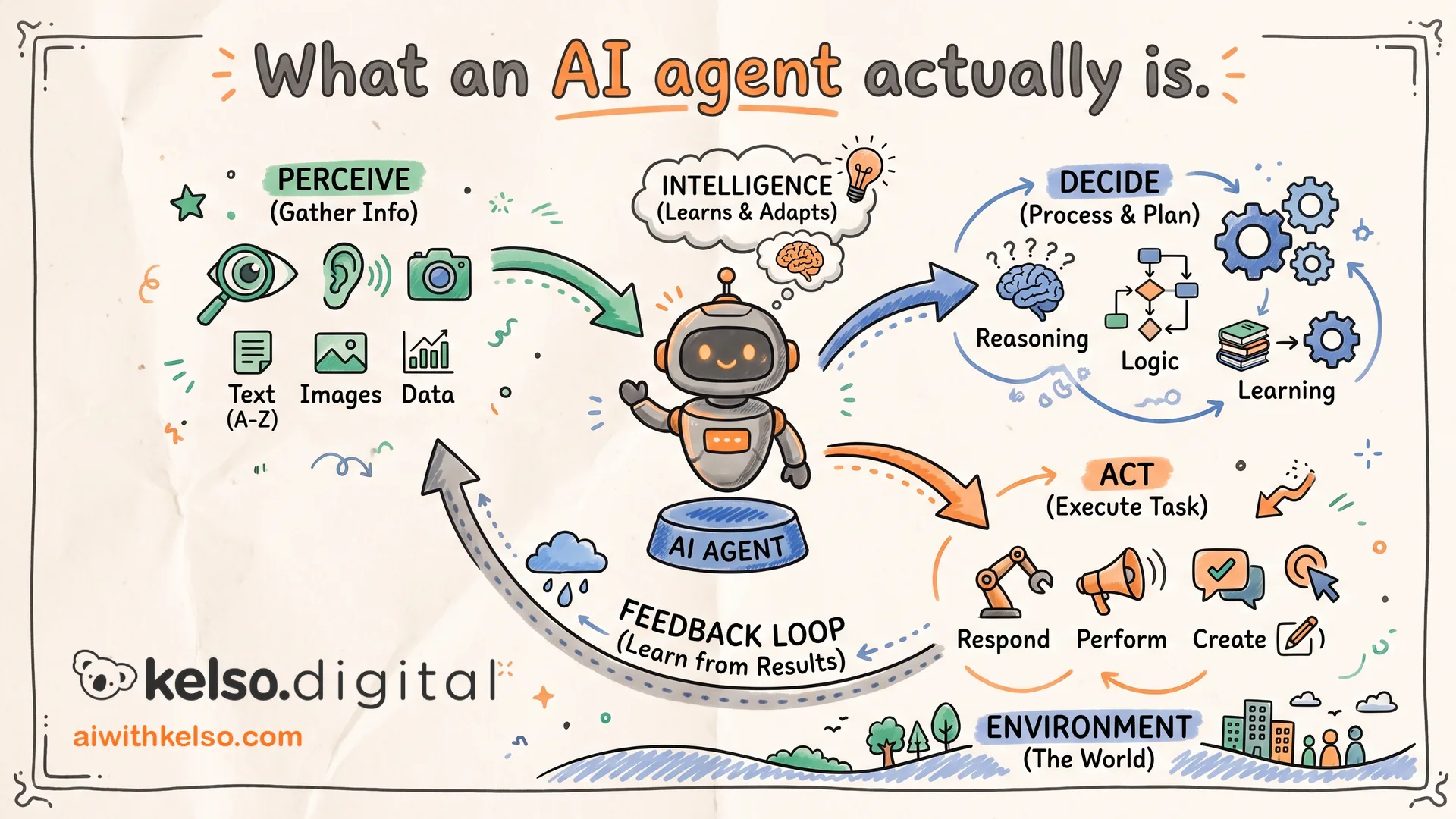
An AI agent is three things: a language model, a set of tools, and a loop.
Here's how it works.
You give the agent a task. The model reads it and makes a decision: answer immediately, think it through, or call a tool to get more information.
If it calls a tool, control passes across. That tool might search the web, query a database, or pull from a document in your drive. The result comes back. The agent decides: is that enough, or does it need another pass?
This keeps going until it has what it needs. Then it responds.
When someone tells you they've built an AI agent for your business, that's what's running underneath. A model thinking. Tools fetching. A loop deciding when to stop.
The tools can be anything. Your CRM. Your email. Your invoicing system. Your calendar. Once an agent can reach those systems, a lot of the repetitive work in your week stops needing you there.
An agent connected to your email and CRM can flag every new lead, pull their details, add them to the right pipeline stage, and draft the first reply, all before you've opened your inbox.
An agent connected to your invoicing system can check weekly for overdue payments and send a first-chaser while you're in a meeting.
Neither of those requires a programmer to set up. Most of it works with the tools you're already using.
Pick the most repetitive task in your week. The one that follows the same steps every time. That's where your first agent goes.